
Healing After Permanent Makeup: Nano Brows, Microblading, Lip Blushing and Eyeliner

Updated: Dec 23, 2025
Below I’ve outlined what you can realistically expect when healing from permanent eyebrows (nano brows and microblading), lip blush, and permanent eyeliner, and why your aftercare may be slightly different from someone else’s.
Healing Stages: What They All Have in Common
Healing after permanent makeup is a process, not an instant result. The colour you see when you leave the clinic is not the final outcome. Over the next few days and weeks, your skin will form a very thin protective layer, shed it, and gradually reveal a softer, more natural result in the process of natural exfoliation.
Most permanent makeup treatments follow a similar pattern:
Days 1–2: Darker and more defined
Colour looks stronger and sharper. The area can feel tight, dry, or slightly swollen.
Days 3–7: Flaking or light scabbing
A very thin protective layer forms and then lifts away. This can look like tiny “dandruff-like” flakes on brows or a light film on lips and eyeliner.
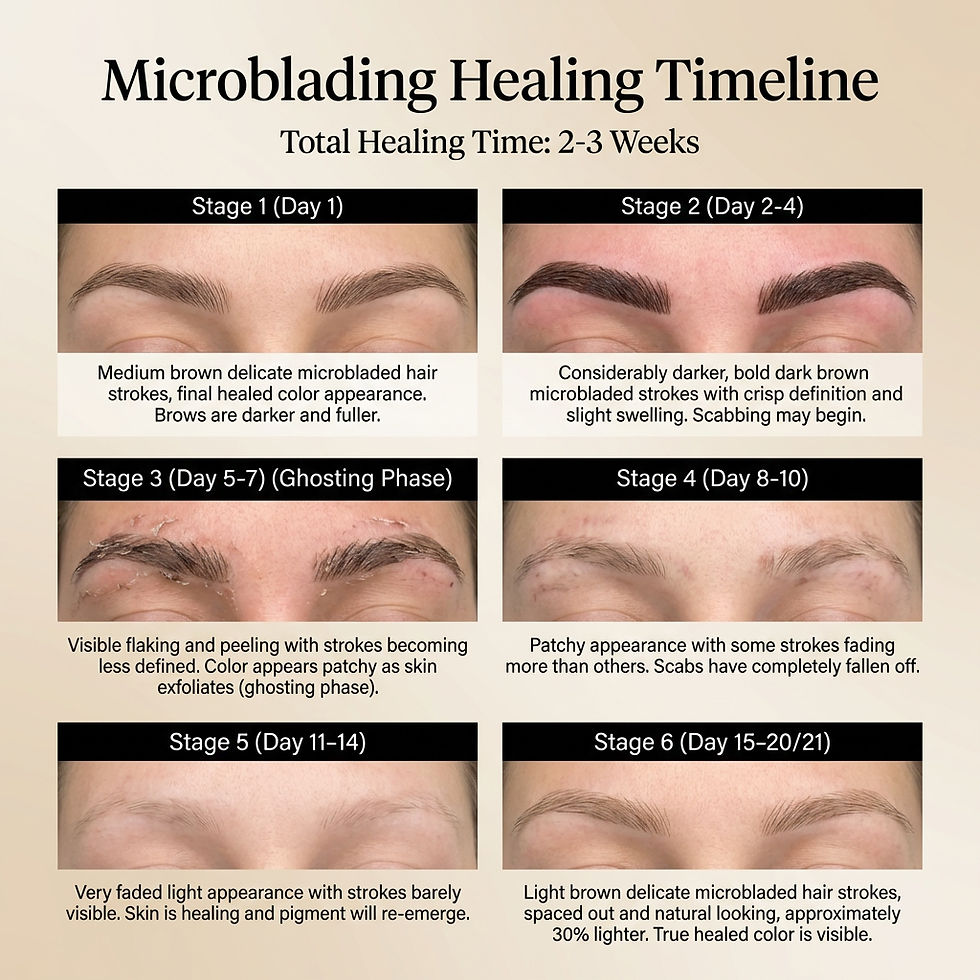
Days 7–14: The “ghosting” phase
The colour may look too light, patchy, or uneven. This is normal while new skin forms over the pigment.
Weeks 3–6: Colour returns and softens
As the skin settles, the pigment becomes more visible again and looks softer and more natural.
Throughout this time, it’s important not to pick, scratch, or rub the area. Let any flakes fall away naturally to protect the pigment and your skin.
Brows: Nano Brows vs Microblading healing process
Nano brows (machine)
Nano brows are usually gentler on the skin and often heal with very minimal, “dusty” flaking:
Light, dandruff-like scabbing around days 3–7
Most visible flaking gone by about a week
Colour softens and settles over 3–6 weeks
Microblading
Microblading can heal with more obvious flaking or peeling, especially if the skin is dry or there was more bleeding during the treatment:
Brows look crisp and dark at first
Flaking/peeling can be more noticeable between days 3–10
Colour may look patchy before it settles over the following weeks
Lips Blushing After
: The Quickest Visible Change
Lip blush and permanent lip tattoo usually have the quickest visible change:
Swelling and strong colour in the first 1–2 days
A light film or scab that lifts around day 3–4
Lips may look lighter or “milky” for a few days
Final colour softens over 3–6 weeks
Because lips are constantly moving and exposed, following your specific aftercare (especially not picking the flakes) is crucial.


Eyeliner: Subtle Lash Enhancement vs Thick Eyeliner with a Flick
Lash enhancement / fine eyeliner
A subtle line between the lashes tends to heal very quietly:
Minimal swelling
Tiny, almost invisible flakes along the lash line
Soft, natural result once healed
Thick or extra thick eyeliner with a flick
Bolder eyeliner requires more work on the skin and often comes with:
Swelling during the treatment and especially the next morning
More noticeable scabbing, especially with very thick designs
A phase where the liner looks patchy or too light before it settles
Why Some People Get More Scabbing or Peeling
Everyone’s skin is different. Some factors that can increase bleeding and scabbing include:
Certain prescription medications or painkillers that thin the blood
Alcohol or coffee within 24–48 hours before treatment
Stress, sensitive or reactive skin
Skin that releases more clear fluid (plasma) during the procedure
More bleeding or fluid can mean thicker scabs and more visible peeling. This doesn’t mean the treatment has failed; it simply means your skin is working to protect itself.
Personalised Aftercare after Permanent Makeup: Why Your Instructions May Differ
On the day of your appointment, I assess:
Your skin type and sensitivity
How your skin behaves during the treatment (bleeding, fluid, dryness)
The style and intensity of the treatment (e.g. subtle lash enhancement vs very thick eyeliner)
Based on this, you’ll be given tailored aftercare – this might be dry healing or using a specific gel or Vaseline-based ointment. Following these instructions closely is one of the most important factors in achieving beautiful, long-lasting results.
When to Contact Me During the Healing Process
Permanent makeup goes through several normal stages: it can look darker, lighter, patchy, flaky, or as if “pigment ghosted” at different times while the skin heals. These changes are expected and temporary.
Because you receive:
Detailed written aftercare instructions
A clear “what to expect” healing guide
Additional FAQs and blog information
there is no need to send daily updates, photos, or reports of every change. The healing process cannot be sped up by checking in, and the appearance changes from one day to the next even without any intervention.
Safety, hygiene and allergies when healing after permanent makeup
All treatments are carried out under strict hygienic conditions, using high‑quality, hypoallergenic pigments and a patch test is performed in advance. This means:
The risk of allergic reaction to the pigments has been screened out
The risk of infection from the treatment itself is extremely low
If an infection does occur, it is almost always due to aftercare not being followed (for example, touching the area with unclean hands or exposing it to contamination).
What to do if you suspect an infection
If you notice signs that may suggest an infection, such as:
Yellow‑green discharge
Worsening redness and tenderness around the area
Feeling generally unwell
your first point of contact should be your GP or appropriate medical professional, not your permanent makeup technician. They are the ones who can examine you in person and prescribe any treatment if needed.
You are, of course, welcome to mention any confirmed diagnosis or outcome at your follow‑up, but I am not able to diagnose medical conditions, and I will always refer you back to your GP for anything that may be health‑related.
A note about routine healing questions
For routine healing questions (flaking, colour changes, mild tightness, dryness, etc.), please:
Re‑read your aftercare sheet
Check the “what to expect after treatment” information
Refer to the FAQ and blog post
These resources have been created so you don’t have to wait for a reply and so I can keep my time and attention focused on providing the best possible treatments in clinic.
Summary of Healing After Permanent Makeup: How Brows, Lips and Eyeliner Heal Differently
All permanent makeup goes through similar stages – darker at first, then flaking or light scabbing, then a lighter “ghosting” phase before the final colour settles over 3–6 weeks. However, each area heals in its own way:
Nano brows (machine / nanoblading):
Usually the gentlest on the skin, with minimal, dandruff‑like flaking. Most visible flaking lifts around 1 week, and the colour then softens gradually.
Microblading:
Can have more obvious flaking or peeling, especially on drier or more reactive skin, or if there was more bleeding during treatment. Healing can feel drier and more “peely” before the colour settles.
Permanent eyebrows (general):
All brow styles look darker and more defined at first, then go through a flaky/patchy stage, followed by a lighter phase called "pigment ghosting" before the final result appears.
Lip blush / permanent lip tattoo:
Lips change quickly: stronger colour and possible swelling at first, then a light film or scab that usually lifts around days 3–4. Lips may look lighter or “milky” for a short time before the final blush returns, which can take up to 12 weeks in case of Permanent Lipstick Tattoo treatment.
Eyeliner between the lashes (subtle lash enhancement):
Typically minimal swelling and very fine flaking along the lash line. Healing is usually discreet and most people feel comfortable returning to normal activities the following day, whilst the healing goes almost unnoticed.
Thick / extra thick eyeliner with a flick:
Requires more work on the skin, so swelling is more likely, especially the next morning. Scabbing can be more noticeable and may peel in small sections before the line softens and evens out.
Throughout all of these, not picking or scratching, keeping to the recommended aftercare (dry or with ointment, as advised for your skin), and allowing the full healing time are key to achieving a smooth, long‑lasting result.


Comments